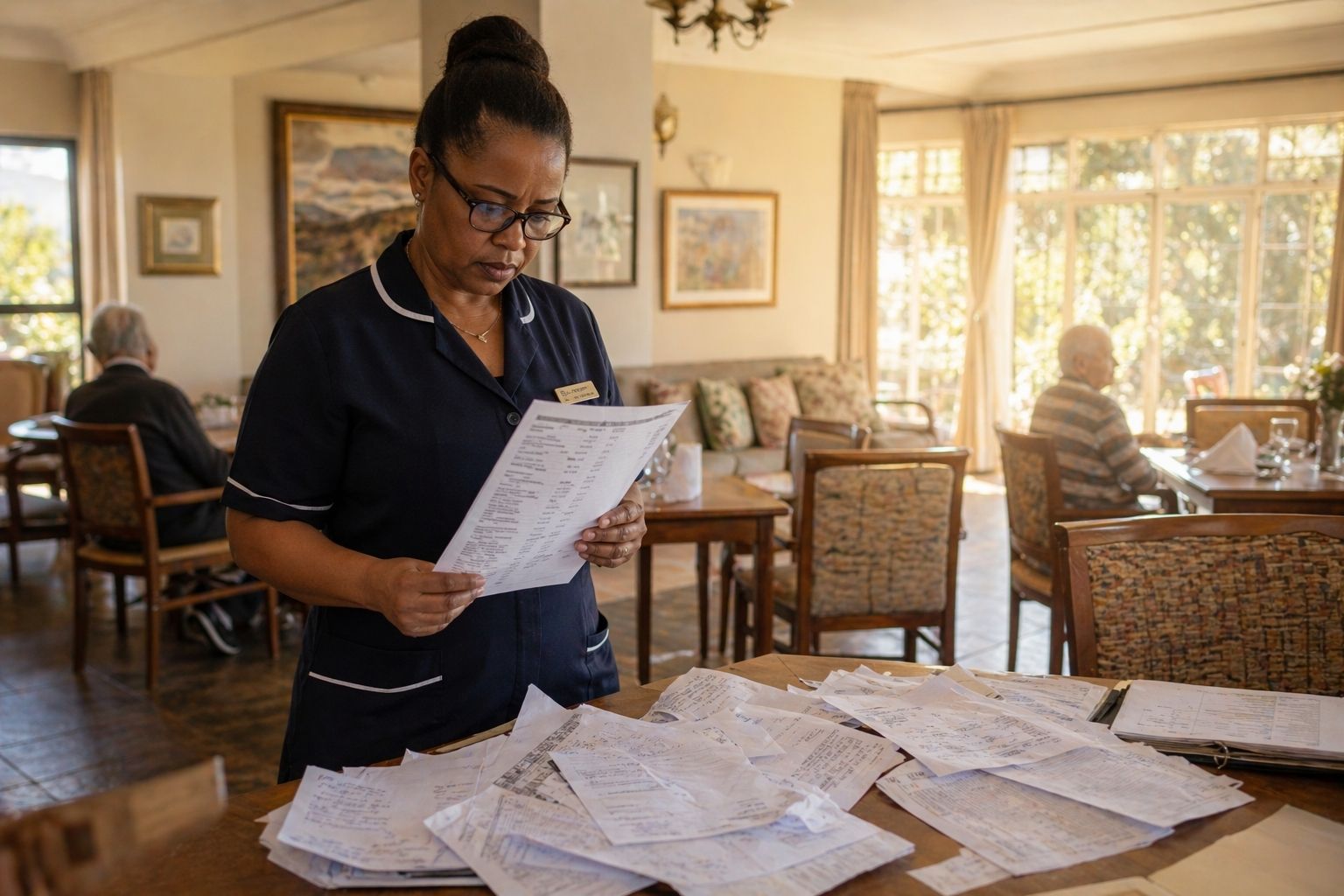
For many retirement estates, paper meal lists remain part of daily operations. Residents complete their meal choices, staff collect the sheets, and catering teams prepare meals based on what has been submitted.
At first glance, this process feels simple and familiar. In reality, it introduces inefficiencies that affect cost control, staff workload, and service quality.
As expectations in senior living environments continue to rise, estate managers across South Africa are beginning to question how effective their current retirement village catering management processes really are — and whether paper-based systems are quietly increasing operational costs.
The Hidden Inefficiencies of Paper-Based Systems
Paper meal lists depend on manual coordination at every step.
This creates several challenges:
- Residents forget to submit their choices
- Handwriting is unclear or incomplete
- Sheets are collected late or misplaced
- Changes are not communicated to the kitchen in time
These issues may seem small on their own, but they quickly accumulate. What appears to be a manageable process becomes inconsistent, especially in larger estates, frail care environments, or during busy service periods.
The result is operational inefficiency that affects both cost and resident satisfaction.
Where the Real Costs Start to Add Up
The biggest misconception about paper systems is that they are “low cost” simply because they do not require technology.
In reality, the costs are just less visible.
1. Overproduction and Food Waste
Without accurate, real-time data, catering teams are forced to prepare meals based on estimates.
This often leads to:
- Excess food being prepared
- Meals going uncollected
- Increased waste at the end of service
Over time, this waste represents a significant portion of food spend.
2. Labour Inefficiency
Staff spend valuable time:
- Collecting meal lists
- Interpreting handwritten notes
- Capturing or confirming orders manually
This is time that could be spent on service delivery instead of administration.
3. Errors, Rework and Billing Disputes
Unclear or incorrect orders lead to:
- Meals being remade
- Residents receiving the wrong items
- Additional pressure on kitchen staff
- Billing disputes where charges do not match what was actually ordered or delivered
Each error adds cost and disrupts the flow of service.
The Resident Experience Impact
In retirement estates, the dining experience plays a central role in daily life.
When meal ordering is inconsistent, residents may experience:
- Missed meals
- Incorrect orders
- Limited confidence in the system
For estate managers, this can lead to increased complaints and reduced satisfaction levels.
A reliable meal ordering process is essential for maintaining a positive resident experience.
Why Paper Systems Break Down at Scale
As estates grow, the limitations of paper-based systems become more pronounced.
Managing meal orders across:
- Larger resident populations
- Multiple dining areas
- Dedicated frail care units with more complex dietary requirements
Requires a level of coordination that paper-based processes struggle to support.
Without a structured retirement home meal ordering system, operations become reactive rather than controlled.
The Shift to Digital Catering Management
Many estates are now moving toward digital solutions that replace manual processes with more structured workflows.
With platforms like GoldenSpoon:
- Residents place orders digitally
- Orders are captured accurately
- Catering teams receive real-time information to support better production planning
This reduces uncertainty and allows teams to operate with far greater control and consistency across retirement estates in South Africa.
Better Visibility, Better Control
One of the key advantages of a digital system is visibility.
Estate managers gain access to:
- Order volumes
- Meal preferences
- Demand patterns
With this visibility, estates can:
- Prepare meals more accurately
- Improve stock management
- Reduce unnecessary waste
A modern senior living food service software solution turns daily operations into structured, manageable processes.
Supporting a Cashless, Modern Environment
Many retirement estates are already moving toward cashless systems for convenience and security.
A cashless meal ordering platform for retirement estates integrates seamlessly into this environment, allowing residents to:
- Order meals easily
- Track their spending
- Maintain independence
At the same time, management gains better financial oversight and reporting.
A More Efficient Way to Manage Catering
Replacing paper meal lists is not just about convenience — it is about improving how the entire catering operation functions.
With a structured retirement village catering management system, estates can:
- Reduce food waste
- Improve operational efficiency
- Enhance resident satisfaction
- Gain better control over costs
This creates a more sustainable and scalable approach to catering.
The Cost of Doing Nothing
The biggest risk for many estates is continuing with a system that no longer meets operational needs.
Paper-based processes may feel familiar, but they:
- Limit visibility
- Increase inefficiencies
- Restrict growth
Over time, these limitations become more expensive than the investment required to modernise.
A Smarter Approach to Retirement Estate Catering
GoldenSpoon provides a purpose-built solution for modern retirement estates.
By replacing manual processes with a structured digital platform, estates can move from reactive operations to proactive management.
Frequently Asked Questions
-
What is retirement village catering management?
Retirement village catering management refers to the systems and processes used to plan, manage, and deliver meals within a retirement estate. This includes menu planning, order collection, meal preparation, and reporting. A structured system helps improve efficiency, reduce waste, and ensure a consistent dining experience for residents. -
Why are paper meal lists inefficient in retirement estates?
Paper meal lists rely on manual processes, which often lead to errors, delays, and missing information. Handwritten orders can be misread, sheets can be lost, and last-minute changes are difficult to manage. These inefficiencies increase operational costs and affect service quality. -
How does a digital meal ordering system reduce food waste?
A digital system captures orders in real time, allowing catering teams to prepare meals based on confirmed demand rather than estimates. This reduces overproduction and helps align purchasing and preparation with actual consumption. -
Is it difficult for residents to switch to digital meal ordering?
Most digital systems are designed to be intuitive and easy to use, even for residents who are not highly familiar with technology. With proper onboarding and support from staff, residents typically adapt quickly. Many find the process more reliable than paper, especially when it ensures their meal preferences are accurately captured every time. -
How does digital catering management improve operational efficiency?
Digital systems reduce manual tasks such as collecting and interpreting paper lists. Orders are captured accurately and shared instantly with the kitchen, which improves workflow, reduces errors, and allows staff to focus on service rather than administration. -
Can digital systems support cashless meal ordering?
Yes. Many retirement estates use digital catering platforms alongside cashless systems. This allows residents to order meals, track their spending, and manage accounts without handling cash, while management benefits from better financial visibility. -
What should estates look for in a catering management system?
Estates should look for a system that offers real-time visibility into orders, accurate reporting, and a simple user experience for residents and staff. It should also support scalability, integrate with existing processes, and enable better production planning so catering teams can operate efficiently as demand changes. -
How quickly can a retirement estate move from paper to digital?
Implementation timelines vary, but many estates can transition within a few weeks. With the right onboarding and support, the move from paper meal lists to a digital system can be smooth and minimally disruptive.
Ready to Reduce Costs and Improve Efficiency?
If your estate is still relying on paper meal lists, now is the time to take a closer look at what that system is really costing you.